
If you’ve kept a backyard pond for any length of time, you already know the mix of pride and peace it brings. The shimmer of koi rising at feeding time… the quiet hum of water after a long day.
But nothing shatters that calm faster than discovering a prized fish gone—vanished without a ripple, with only a few scattered scales or muddy footprints hinting at what slipped in during the night… You need pond predator protection!
Across the USA, predators are visiting backyard ponds more often than ever. Some arrive with the patience of a heron, others with the unapologetic boldness of a raccoon. And while their instincts are natural, your desire to protect your pond is just as valid.
This guide takes you inside the minds and habits of these animals, then hands you a layered protection plan that actually works—one shaped by behavioral science, modern tech, and practical backyard strategy.
Pond Predator Protection
Why Backyard Pond Predators Are Increasing Across the USA
It’s not your imagination—predator visits really are becoming more common. As cities spread outward, natural hunting grounds shrink, pushing wildlife into residential areas where ponds offer an easy, dependable meal. Warmer seasons also keep predators active longer than they were decades ago.
The Most Common Predators Targeting American Ponds
You may already suspect who’s been lurking around your water, but here are the usual suspects:
-
Great blue herons and night herons are incredibly smart, patient, and federally protected.
-
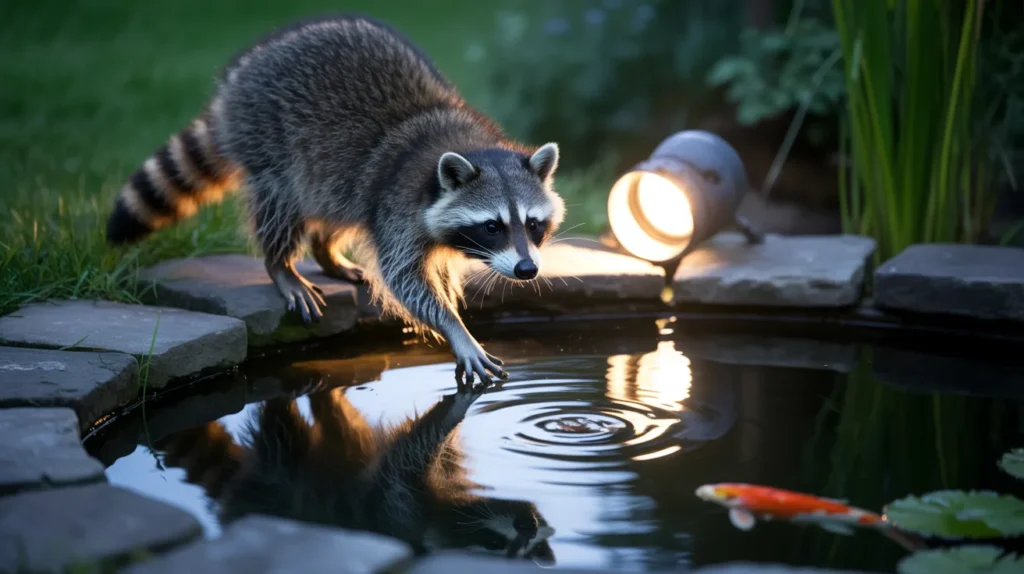
Raccoons — clever, fearless, and equipped with hands that can pry open almost anything.
-
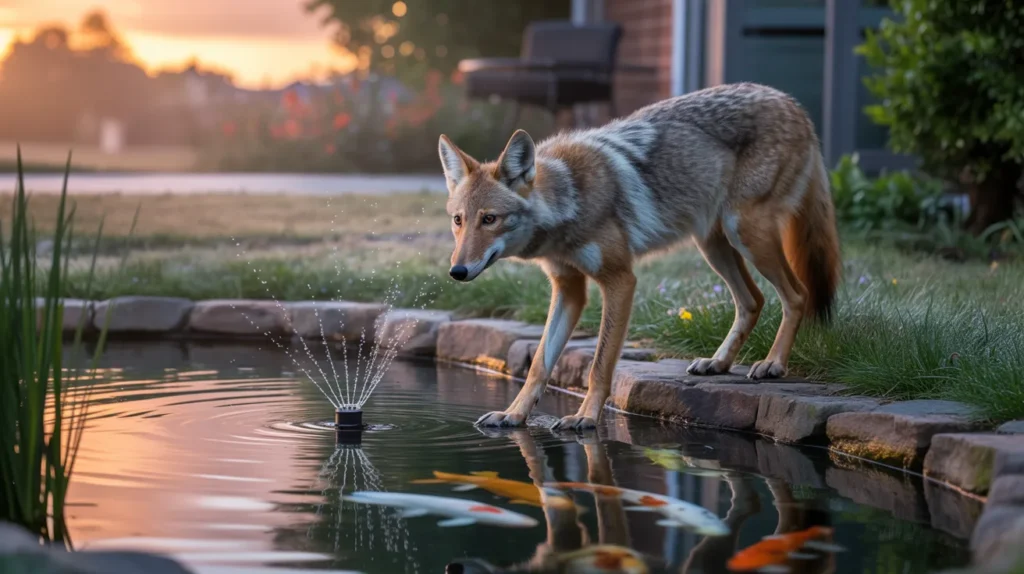
Coyotes and foxes — opportunists drawn to movement, scent, and shallow water.
-
Snakes — especially in Southern climates where warmth and water make ideal hunting grounds.
-
Outdoor cats — stealthy and surprisingly determined when fish are involved.
What makes this tricky is that each predator behaves differently, so protecting your pond isn’t a one-size-fits-all project—it’s a puzzle with species-specific pieces.
Identifying Which Predator Is Targeting Your Pond
Before you install a single deterrent, it’s crucial to know who you’re up against.
Clues That Reveal the Culprit
-
Herons leave tall, unmistakable tracks and tend to remove larger fish in single, clean strikes.
-
Raccoons leave chaos—shifted rocks, trampled plants, muddy paw prints, and sometimes half-eaten remains.
-
Coyotes or foxes create wider tracks and may leave signs of digging near the water.
-
Snakes leave no disturbance at all—you simply notice smaller fish missing.
Timing Matters
-
Herons favor early morning and late afternoon.
-
Raccoons and snakes work at night.
-
Coyotes hover around dawn or dusk.
Match your defenses with these rhythms, and you instantly gain an advantage.
Patterns of Birds vs. Mammals vs. Reptiles
Birds stalk. Mammals rummage. Reptiles glide. Once you learn the “signature style”, predator diagnosis becomes surprisingly intuitive.
Physical Deterrents That Actually Work in the USA
Let’s start with tried-and-true defenses—simple tools with outsized impact.
Motion-Activated Sprinklers & Lights
Few tools deliver such consistent results. A sudden burst of water is enough to send a heron into flight or stop a raccoon mid-step. These devices are effective precisely because predators hate surprises. Try the Orbit 62100 Yard Enforcer Motion-Activated Sprinkler. It’s sensor activated and reacts to the heat and motion of an animal, which in turn detects movement up to 40 feet away. This then triggers a burst of water to keep the unwanted visitors away from your pond.
Overhead Netting & Aviary Systems
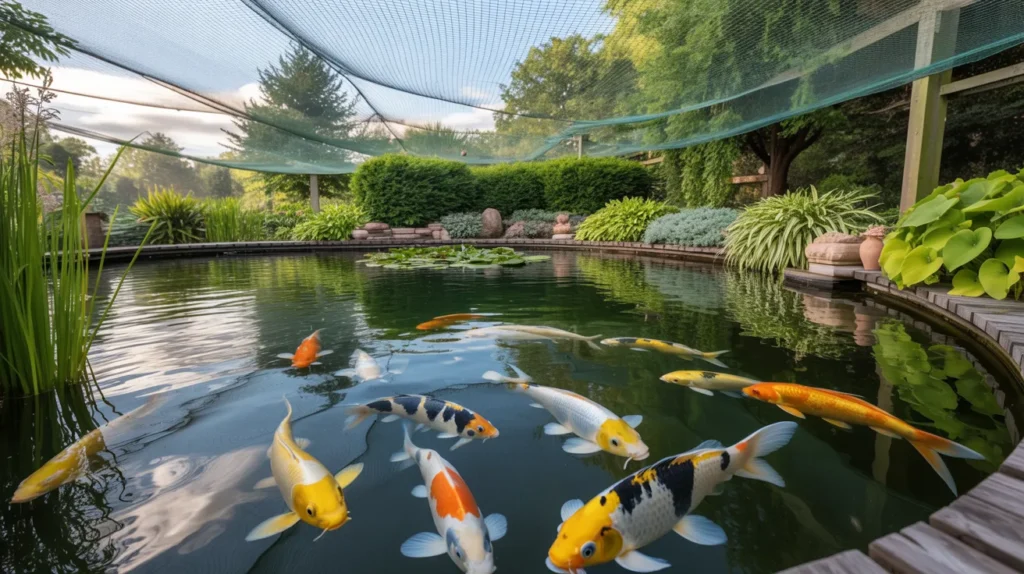
When installed correctly, overhead netting acts like a forcefield. Here’s the key: Raise the net at least a foot above the water. Low nets can be pushed down by raccoons, but elevated netting blocks both birds and mammals without disrupting the pond’s aesthetics. This Bird Netting for Garden Protection is ideal for ponds. The square mesh design makes it easy to spread, and that in itself makes the task less time-consuming.
Increasing Pond Depth
A minimum depth of 3 feet changes everything. Herons can’t spear fish, raccoons can’t reach into deeper areas, and fish gain life-saving hiding space. Adding caves or rock tunnels only strengthens the effect.
Natural & Landscape-Based Predator Defenses
You can design your landscape to make predators uncomfortable long before they reach the water.
Plants as Visual Barriers
Herons rely heavily on sight. When tall plants like rushes, reeds, or irises break up the pond’s outline, the hunting calculus becomes far more difficult for them.
Obstructing Predator Pathways
Predators prefer easy, predictable routes. By adding rock borders, thorny shrubs, dense groundcovers, or uneven stone walkways, you force mammals to work harder—something they tend to avoid.
Creating Hiding Zones for Fish
A little murkiness doesn’t hurt. Slightly clouded water and strategic shelter spots—pots on their sides, floating plants, underwater caves—give fish places to vanish in seconds.
High-Tech Predator Protection Options
The modern pond owner has tools that didn’t exist even a decade ago.
Cameras & Motion Sensors
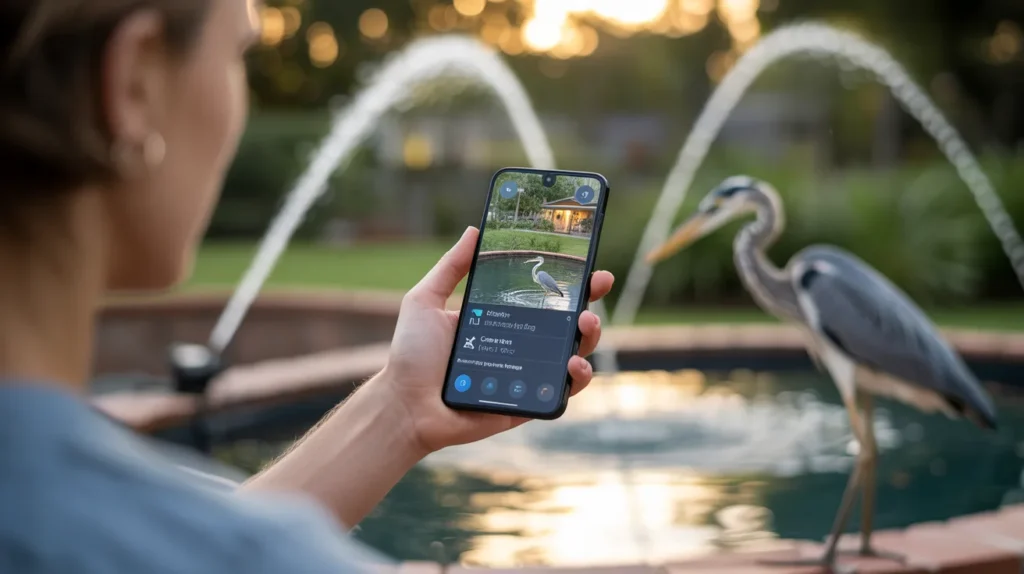
Thermal cameras, wildlife cams, and smart sensors all help track who’s visiting and when. The data alone can transform your strategy. Take a look at the GardePro A3S Trail Camera, which is equipped with a Sony Starvis image sensor and the new-generation no-glow (black) infrared LEDs, which, combined, deliver crisp and clear images up to a massive 100 ft at night, absolutely perfect for stealth.
Automated Decoys & Sound Emitters
Static plastic owls rarely fool anyone—especially not a heron. But moving decoys paired with ultrasonic or noise-based deterrents can disrupt predator confidence.
Smart-Home Integrations
Imagine your porch light, sprinkler, or backyard speaker activating automatically the moment a predator approaches. That’s the level of control these systems offer.
Legal Considerations Every USA Pond Owner Needs to Know
Wildlife laws matter—and they differ by species.
Herons Are Federally Protected
This can’t be stressed enough:
You cannot harm, trap, or capture a heron.
All defenses must be passive, non-contact, and deterrent-based.
Mammal Regulations Vary by State
Raccoons and coyotes may be considered nuisance animals in some states, but relocation often requires permits or professional help.
Relocating Wildlife Without Approval Is Illegal in Many Regions
Always check state and county regulations before attempting any physical removal.
FAQs Homeowners Ask Again and Again
Are herons protected?
Yes. This shapes your entire strategy—you work around them, not against them.
What’s the safest deterrent for koi?
A combination of motion sprinklers and elevated netting is the gold standard for most ponds.
Do decoys work?
Only if they move or pair with sound or motion. Static decoys quickly become background objects predators ignore.
Products / Tools / Resources
Below are resources commonly used by pond owners who successfully reduced or eliminated predator attacks:
-
Motion-activated sprinklers (brands like Orbit Yard Enforcer).
-
Solar-powered pond spotlights or perimeter lighting.
-
Underwater fish caves and shelters for instant concealment.
-
Wildlife cameras for nighttime monitoring.
-
Local wildlife control agencies for legal guidance and safe intervention.
- Do Fish Ponds Need To Be Fenced
Disclosure: As an Amazon Associate, I earn from qualifying purchases.